How to manage and treat nocturia
There is no ‘one size fits all’ approach to managing nocturia as the trigger can vary from person to person. For some people, it could be more complex, like pre-existing conditions, and for others it could be as simple as diet.
There are various different ways to manage and treat the condition, including:
Lifestyle changes
Reduce fluid intake – Try and limit drinks in the 2–3 hours before going to bed so you’re less likely to need to pee.
Cut down diuretic drinks – Alcohol and caffeinated drinks can irritate the bladder and make you need to pee more. You should limit these drinks in the evening.
Elevate your legs – Do this for an hour or two before bed to help redistribute fluid before lying down to sleep.
Keep a bladder diary – Finding a trigger for your symptoms can help you manage your condition better. A bladder diary will help you document your fluid intake and symptoms to help you identify any patterns.
Bladder training
Bladder training involves gradually increasing the time between going to the toilet during the day and having scheduled bathroom trips. Distraction tactics are used throughout your training to help you hold your pee for an extra few minutes.
The aim of the training is to train your bladder to hold more pee and reduce the amount of times you go to the toilet. The benefit of bladder training is that it is a simple, non-invasive that can help reduce urinary frequency and night-time wake ups over time.
It can take several weeks to a few months to see a big improvement in your symptoms, so you have to be patient and consistent with your training.
Devices and further treatment
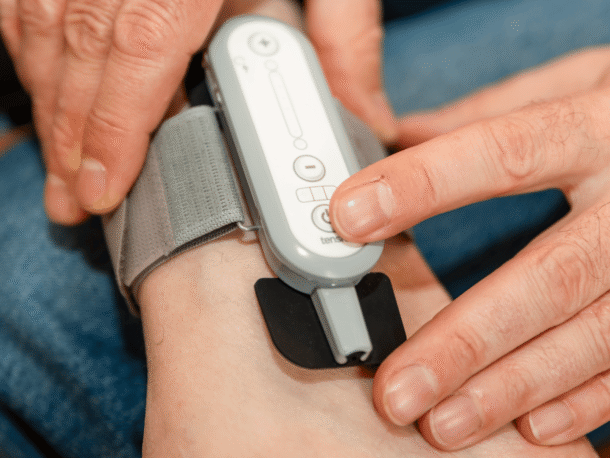
If you don’t see an improvement in your symptoms after lifestyle changes and bladder training, you might want to consider further treatment. Devices like Tensi+ offer a non-invasive, medication-free way to help manage bladder symptoms such as nocturia.
Tensi+ uses transcutaneous posterior tibial nerve stimulation (T-PTNS) to help relieve symptoms of overactive bladder, and is specifically suitable for people who wake at night to pee. Find out more on our Tensi+ page.
For some people, particularly those with limited mobility or additional continence needs at night, catheter options may form part of an overall night-time management plan, supported by advice from a continence nurse or GP. However, catheters are not routinely used to manage nocturia itself.