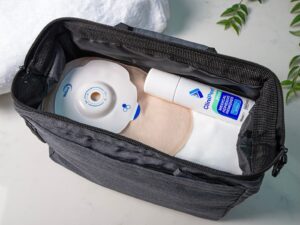

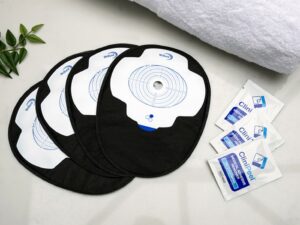

It’s normal to feel anxious at first, but with time, sleeping with a catheter bag becomes more comfortable and confidence builds. In this page, we will provide advice on which catheter bag to use at night, where to store your catheter bag, sleeping positions and tips for a restful sleep. Learn how you can reduce the risk of your catheter bag leaking or your tubing becoming twisted with simple changes to your evening routine.
Note to readers: According to research from AgeUK, the word “pee” is generally preferred, so we’ve used it consistently throughout this page.
What catheter bag should I use at night?
It’s personal preference what kind of catheter bag (also called drainage bag) to use at night. Some people prefer to keep wearing their leg bag, especially if they find it comfortable and secure. However, you may find a night bag gives you better peace of mind because they have a higher capacity, meaning you’re less likely to need to empty your bag in the night.
What catheter bag will work best depends on the level of drainage you usually experience and how much you move in your sleep. Most importantly your catheter bag should feel secure and comfortable to help you have a restful sleep.
You can also use a leg bag and night bag together, simply attach the night bag to your leg bag. If you are unsure which approach to use, test the different options to find out what works best for you.

Where should I put my catheter bag at night?
Where you should position your catheter bag depends on what type of bag you are using.
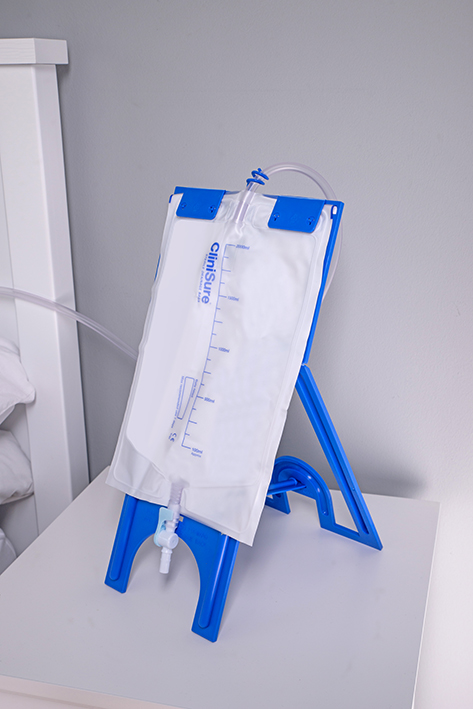
If you’re using a night bag, most people use a night bag stand for security. A night stand sits beside your bed and holds your drainage bag in an upright position below the level of your bladder. This is a popular choice as there is no risk of you rolling onto your bag in the night and your tubing is less likely to become tangled.
If you prefer to wear a leg bag overnight, position your bag on either your thigh or calf. Ultimately, you should choose a position where the bag feels most safe and is least likely to be disturbed as you move in your sleep. You also want to check that the tubing has enough slack so that pee can drain freely into your bag.
Is my catheter bag attached properly?
Use these steps to check that your catheter bag is applied correctly and securely to reduce the risk leaks. You can also get a downloadable checklist in our night-time bladder care guide.
Position
Keep your bag positioned below the level of the bladder so pee can flow freely.
Tubing
Make sure your bag tubing is straight, without any bends or twists.
Tubing tension
Your tubing should be loose enough that it is comfortable and not pulling.
Security
Keep your tubing secure and in place with a tubing and catheter securement device, such as CliniFix.
How to attach a catheter night bag
When it comes to emptying your drainage bag or changing your bag, the most important thing is to make sure you are being as clean and sanitary as possible to avoid infection.
Attach your catheter leg bag in seven simple steps:
- Gather the supplies you will need
- Empty your current bag
- Wash and dry your hands thoroughly
- If you want to connect your night bag to your leg bag, clean the connector on your leg bag with a sterile wipe
- Open the leg bag connecter
- Open your night bag and check that the drainage tap is closed
- Remove the connector cap from your night bag, making sure not to touch the connector
- Push the night bag connector into the outlet of your leg bag, urinary sheath or catheter
Tips for sleeping with a catheter bag
Sometimes feeling anxious about your catheter bag can make it difficult to get a good night’s sleep. You might be worried about your bag becoming full, leaking or tugging while you’re asleep. Your diet and evening routine can even play a role in how well you sleep.
Use these three simple steps to help minimise anxiety and help you feel more comfortable when going to bed:

Keep a towel nearby
A towel or waterproof mat can be useful if you are worried about leaks during the night.

Wear loose clothing
This will make sure you don’t restrict your catheter bag and you’re comfortable.

Limit caffeinated drinks
Try to avoid caffeine in the 3-4 hours before bed – caffeine is a diuretic (a substance that makes you pee more) which can disturb your sleep.
Managing catheter bag problems
Leaks
It’s completely normal to worry about leaks when wearing a catheter bag. A leak could happen due to your bag being full, twisted tubing, connectors becoming loose or your bag being positioned too high. Use these tips to help reduce the chance of night-time leaks:
- Keep your bag positioned below the level of the bladder
- Make sure your bag tubing is straight, without any bends or twists
- Use a night stand to keep your bag stable beside your bed
- Empty your bag before going to bed to avoid it becoming too full
Twisted tubing
If you move a lot while you are asleep, you may experience twisted tubing on your bag. Your tubing shouldn’t be too tight, it should have some slack so that it doesn’t pull when you’re moving around. It’s important that your tubing isn’t too loose because that can cause tubing to loop and twist.
You could also try a retaining strap to keep your tubing straight and prevent your catheter from moving. At CliniMed, we offer CliniFix which is skin-friendly adhesive strip that helps to keep your tubing length secure.
Sleeping positions
You can sleep in most positions with a catheter bag – the key is to make sure the tubing is comfortable and the drainage bag stays lower than your bladder.
It’s totally personal preference what position you sleep in, there is no right or wrong. When finding a position to sleep in, you just want to consider whether your tubing will be secure and not restricted in any way.
Sleeping on your back – helps to keep your tubing straight and reduces the risk of you lying on your connector
Sleeping on your side – not likely to cause any issues as long as your tubing is on the opposite side to the side you’re sleeping on
Sleeping on your front – generally safe but may also restrict the flow of pee if you squish your tubing

Key takeaways
You can sleep with a leg bag, night bag or both, it just depends what feels most comfortable and secure for you.
Many people like to use a catheter bag night stand to keep their bag upright and stable.
For a restful sleep, try to limit caffeine intake in the evening, wear comfortable clothing and keep a towel/waterproof mat nearby if you’re worried about leaks.
To reduce the risk of leaks check your tubing is straight, your connectors are inserted firmly and your bag is positioned below the bladder. You can also empty your bag before bed and use a night stand.
Your tubing can become twisted due to moving in your sleep or if your tubing is too loose.
All sleeping positions are generally safe as long as your catheter bag and tubing aren’t restricted.
Catheter bags and accessories

Leg bags
- Sterile (can be used for 5-7 days)
- Can be connected to a sheath, indwelling catheter and night drainage bag
- Choice of T-tap or level tap, and long or short tubing

Night bags
- Non-sterile (single use) and sterile options (5–7 day usage)
- Choice of T-tap or level tap
- Can be connected to a leg drainage bag, sheath or indwelling catheter*

Securement and fixation products
- Designed to enhance comfort, security, and confidence
- Browse retaining straps, tube holders and barrier creams/films to protect your skin
*Only the sterile night bag can be connected to an indwelling catheter.
Frequently asked questions
This can happen if you drink large amounts before bed or have certain conditions that cause you to pee more. Try limiting how much you drink 2–3 hours before going to sleep and avoid caffeine and alcohol. If it continues, speak with your nurse for support.
Tubing length is personal preference, there is no ‘right’ or ‘wrong’. Your tubing should be long enough to allow comfortable movement in bed without pulling, but not so long that it loops or becomes twisted.
Night drainage bags usually have a big capacity, meaning they can hold a lot of pee. If your night bag is drainable, it can be helpful to empty it before bed and in the morning. If the bag becomes full during the night, or isn’t draining properly, speak to your nurse.
This can happen if the tubing is kinked, if the bag is above the level of your bladder, or if the tap is closed. Check the tubing, make sure the bag is below bladder level, and double check all connections are open and secure.
Contact a healthcare professional if you’re experiencing no drainage after checking our checklist and confirming there are no issues with your bag or tubing.
This depends on whether the catheter bag you are using is sterile or not. Non-sterile bags can’t be reused and need to be disposed of after one use. However, sterile bags can be used for a few days until you need to change them. At CliniMed, our CliniSure Sterile Night Bags can be used for 5–7 days before they need to be changed*.
*However, if your catheter bag becomes disconnected from a catheter, your bag should be replaced.
Try gently repositioning the tubing so it runs smoothly to the night bag. Using a night stand to hold your catheter bag and avoiding loops in the tubing can help prevent pulling.
Yes. Many people can sleep comfortably and safely on your side. Just make sure the tubing has enough slack and the night bag is placed lower than your bladder.
Your pee can be darker overnight because it’s more concentrated. If it becomes cloudy, very strong smelling, or you feel unwell, seek medical advice.
You can use a leg bag at night if this feels more comfortable for you. You should remove any leg bag straps at night to avoid complications.
You may want to connect a night bag to your leg bag as this will give you better capacity, meaning you won’t need to empty your leg bag as often.
Support and resources
Find lots of helpful tips for living with incontinence in our resource library.
How to self-catheterise
Learn how to self-catheterise safely and comfortably with this step-by step guide.
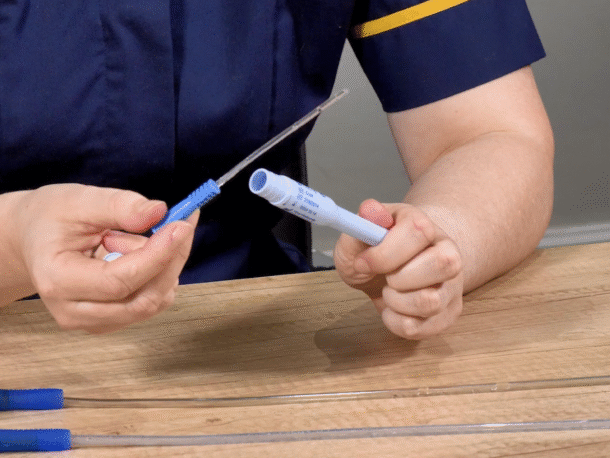
What is self-catheterisation
Understand the types of intermittent self-catheters, how to choose the right catheter length and tips for living with self-catheterisation.

Bladder diary
Track daily activities, fluid intake and bathroom visits to gain insights into your urinary patterns.

Urinary incontinence catheter care guide
Get advice on living with a catheter, including helpful tips, solutions to common challenges and how to gain confidence.