



Designed to support people with continence issues, this guide offers practical advice and strategies to manage both the physical and mental health aspects of incontinence.
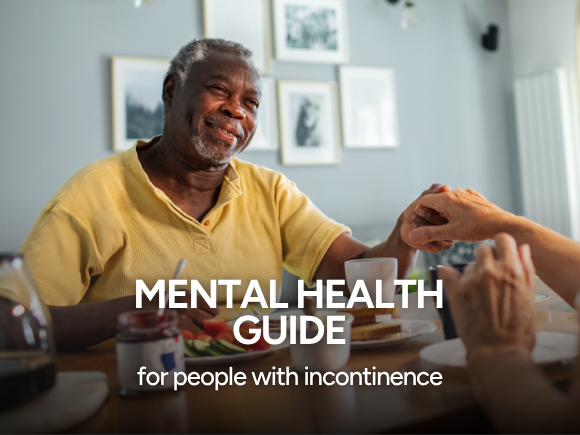
Mental Health Guide for People with Incontinence
Helping you take care of your mental health
Living with incontinence can bring a mix of emotions, including anxiety and depression. Our mental health guide can help you deal with these feelings by providing:
✅ Tips to help you cope after receiving your diagnosis
✅ Advice to help you manage low self-esteem, social avoidance and intimacy
✅ Support around intimacy, with tips to help you feel more comfortable and at ease
✅ Help with coping with everyday life
What help you’ll find inside 👀
Coping with your diagnosis
Page 2Recognise the five main affects that your diagnosis can have on your life: psychological, support, future planning, behaviour and treatment expectations.
Incontinence and mental health
Pages 6–7Explore how incontinence and can lead to feelings of anxiety, depression and low self-esteem. Learn which local charities you can reach out to for support and gain tips for coping with everyday life.

Meet the author
Dr John S. Young
Professor of Translational Healthcare at Teesside University. John specialises in bladder health and urology, focusing on the underlying conditions that affect bladder function and quality of life, particularly for people experiencing incontinence.