

Skip to content

Your guide to barrier creams and films

Barrier products are designed to shield the skin from moisture, body fluids, adhesives and friction. They are commonly used in stoma care, continence care and wound management. A barrier product provides a protective layer on the skin that helps minimise breakdown and discomfort.

This guide explains what barrier creams and films are, the difference between them, when to use each, and how to choose the right product for your needs.


What is a barrier cream or film?

A barrier cream is applied to the skin to protect it from prolonged exposure to moisture, body fluids (sweat, poo and pee) or friction. A barrier film works similarly but forms a thin, transparent, breathable layer on the skin surface that dries quickly. Barrier films can also be in a wipe or spray format.

All types are commonly used in stoma care, incontinence management and wound care to help prevent skin irritation and breakdown. A barrier product provides protection against moisture-associated skin damage (MASD) and medical adhesive-related skin injury (MARSI).

A barrier product is useful for people who live with a stoma, have incontinence, have wounds, or have fragile, sensitive skin. This is due to the added protection and gentleness on the skin.

Image of the full CliniShield Advance range

Barrier cream vs barrier film: what is the difference?

ProductOverview
Barrier creamA barrier cream is richer and thicker than a barrier film, meaning only a small amount is needed. Designed for dry or vulnerable skin, it moisturises while providing a protective coating to safeguard intact skin from wee and poo.

Using a barrier cream as part of a daily skincare routine shields against bodily fluids, helping to prevent Incontinence-Associated Dermatitis (IAD) and lower the risk of skin breakdown.
Barrier filmA barrier film is a thinner, quick-drying, liquid formula that adds a waterproof protective layer to the skin. A barrier film is non-greasy and can help shield the skin from moisture, friction and medical adhesives.

Using a barrier film creates a dry, smooth surface on your skin which can help to keep your stoma bag or urinary sheath secure and in place. A barrier film can also help protect the skin from bodily fluids to prevent and manage incontinence-associated dermatitis, a common form of moisture-associated skin damage (MASD).

At CliniMed, our barrier film range, CliniShield Advance, is available in wipe or spray so you can find a format that works best for you.

When to use a barrier cream or film

Around the stoma: You can use a barrier film product (spray or wipe) to protect the peristomal skin from output.

For people with incontinence: A barrier cream or film can be used to protect skin from prolonged moisture exposure and body fluids.

For fragile or elderly skin: A barrier cream is useful for added hydration where skin is thinner and more vulnerable to breakdown.

When medical adhesives are used regularly: Such as in urinary sheath or stoma bag users, to protect from adhesive-related skin injury (MARSI).*

Wound care: A barrier cream or film can shield healthy skin around a wound, keeping it dry and preventing irritation.

*A barrier cream can interfere with the adhesive in your product. Instead of a cream, opt for a barrier film spray or wipe.

Photo of two older women talking a walk on the beach together

How to choose a barrier cream or film

When choosing a barrier cream or film, you may want to consider:

Your skin type and condition

What you need will depend on whether your skin is dry, sensitive or fragile.

Whether you use an adhesive medical device

Such as a urinary sheath, or stoma bag. For example, a cream skin protectant can interfere with how sticky your product is.

Format

Whether you would prefer a cream, wipe or spray format. Consider which may be most compatible with your skin and adhesive medical device.

Ingredients

Most barrier products are alcohol free, but it’s important to check ingredients of your chosen product

Not sure which product to try?

Request a free sample so you can test and compare to find what works for you.

How to use a barrier cream

Clean your skin and dry completely. You can use a skin cleanser to cleanse your skin prior to application.

Apply a pea-sized, even layer to the skin.*

Reapply every 24 hours, depending on how often you need to clean the skin.**

If you apply your barrier cream to an area with skin folds, make sure that skin-contact areas are separated to allow them to dry before returning to normal position.

*Depending on how much of size of the area to cover. For larger skin surfaces, use a larger amount of barrier cream.
**For more extreme cases of diarrhoea, you may want to reapply your barrier cream after each episode.

Image of a group of friends laughing

How to use a barrier film

Clean your skin and dry completely. You can use a skin cleanser to cleanse your skin prior to application.

If using a wipe, tear along the top to open the sachet and remove the wipe from the sachet.

If using a wipe, gently apply a coating to the skin. If using a spray, spray an even coating onto the skin.

Allow the barrier film to dry completely before applying anything to the skin, e.g. your stoma bag or urinary sheath.

Reapply every 12–48 hours depending on how often you clean the skin. Alternatively, every time you change your adhesive medical device.

If you apply your barrier film to an area with skin folds, make sure that skin-contact areas are separated to allow them to dry before returning to normal position.

Image of an elderly lady sitting down in a garden reading

Recommended barrier creams and films

Shop the CliniShield Protective Barrier range to find a product that works best for you.

Image of the CliniShield Advance Protective Barrier Creams

Protective Barrier Cream

  • Skin-friendly, non-sting and non-sticky formulation
  • Alcohol, fragrance, parabens, and phthalates free. Not made with natural rubber latex
  • Helps prevent skin irritation, breakdown, and damage caused by incontinence (pee and poo)
View product
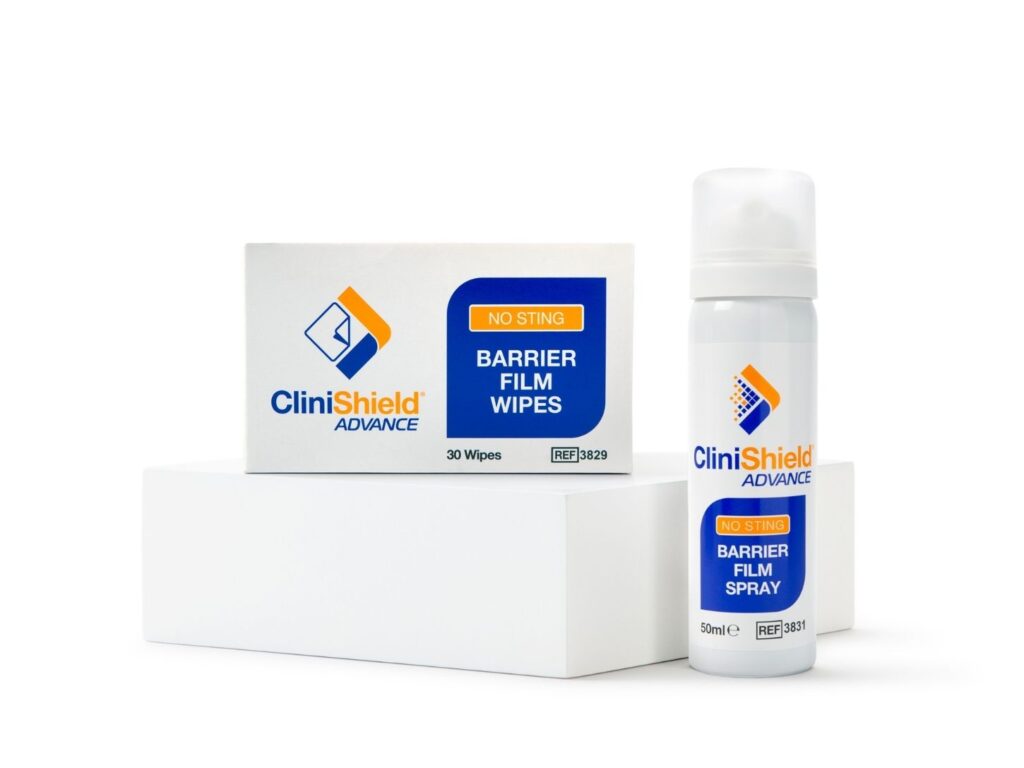
Photo of a box of CliniShield Advance wipe sachets on a white box and a can of CliniShield Advance barrier film spray next to it.

Barrier Film Wipes and Spray

  • Up to 48-hour skin protection 
  • No sting formulation 
  • Tacky texture helps stoma bags and urinary sheaths stay in place 
  • Bag-on-valve spray can for 360° application and up to 99% emptying to maximise value 
View product

Key takeaways

Barrier products add an extra layer to the skin to protect it from moisture, adhesives or output

Barrier creams and films are used in stoma care, incontinence management and wound care

Barrier creams and films both provide protection, but creams provide added hydration to the skin

Barrier creams can interfere with the adhesives in your adhesive medical device, so they are not recommended under your stoma bag or sheath

When choosing a barrier product, consider the condition of the skin, formats and ingredients

CliniMed offer CliniShield Advance Protective Barrier Cream, and CliniShield Advance Barrier Film range (spray and wipes) to protect the skin

Frequently asked questions

A barrier cream is used in incontinence care where the skin can become sore from prolonged contact with bodily fluids. It can also be used in wound care, and for elderly people who have thinner skin that is more prone to breakdown.

Support and resources

Find lots of helpful tips for living with incontinence in our resource library.

Photo of two women sitting in a cafe laughing together.

Common causes of incontinence

Discover what causes each type of urinary incontinence and how they affect both men and women.

Learn more
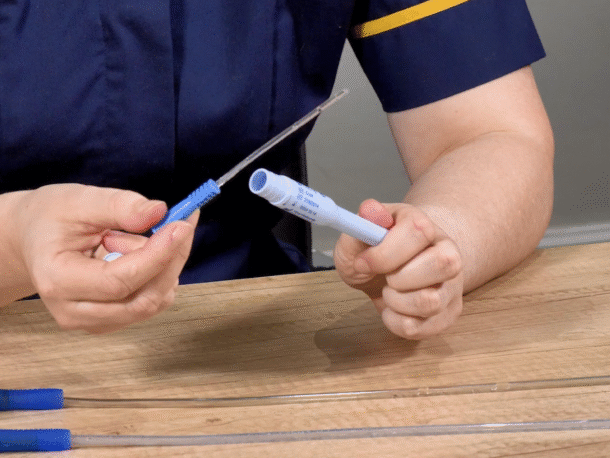
Louise Harrison showing a gel catheter

What is self-catheterisation

Understand the types of intermittent self-catheters, how to choose the right catheter length and tips for living with self-catheterisation.

Learn more
A woman in a wheelchair sits at a dining table taking a croissant from a plate offered by a young man in casual clothes, they could be mother and son.

Bladder Diary

Track daily activities, fluid intake and bathroom visits with our free downloadable bladder diary.

Get your free copy
Photo of an elderly man shaking hands with another man outside in a field.

Prostate-related urinary incontinence

Learn how the prostate affects bladder control, common prostate-related causes of urinary problems, diagnosis and treatment options.

Learn more