

Not sure if you’re drinking enough? Download our free hydration guide to learn how much fluid your body needs, spot the signs of dehydration, and check your hydration levels using our easy pee colour chart. It also includes hydrating food ideas, a quick smoothie recipe, and helpful tips for carers.
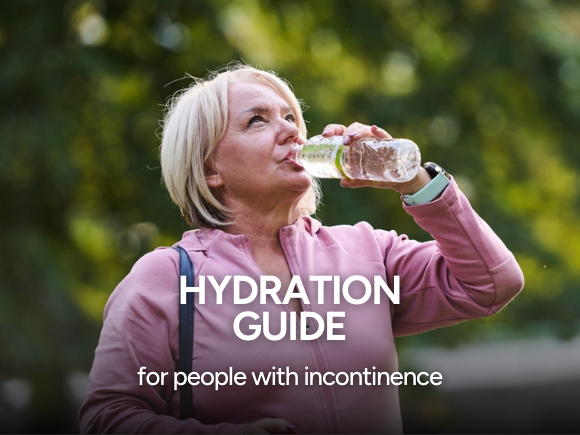
Continence Hydration Guide
Stay hydrated with our free guide
Am I drinking enough? How much do I need to drink? Am I dehydrated? These are all common questions we may not know the answers to.
In this guide we will cover:
✅ Why being hydrated is so important – for your bones, immunity, digestion and lowering the risk of heart attack
✅ What dehydration looks like – what your pee should look like and key symptoms
✅ Hydrating food and drinks to incorporate into your diet
Over 380 people have downloaded this guide!
What help you’ll find inside 👀
Water is essential for life – why?
Pages 3–4Staying hydrated can help your body maintain good blood pressure, carry nutrients, support organs and joins – and much more.
Page 4 includes advice for catheter users, highlighting why fluid is important for reducing constipation and Catheter Associated Urinary Tract Infections (CAUTI).
Symptoms of dehydration – what is your pee telling you
Pages 7–8Anyone can become dehydrated but some people are more at risk – learn what these risk factors and people are.
Use our pee chart to see what your pee should look like if you’re well hydrated vs dehydrated.
Sample menu and smoothie recipe
Pages 9–10Use our sample menu to see how often you should be drinking throughout the day to meet the guidance on hydration.
Find out what food has a high fluid content to help you stay hydrated, and try out our smoothie recipe!
Hydrating food and fluids
Pages 5–6Learn what drinks can make you pee more and what the best hydrating fluids are.
Get guidance on drinking caffeine, sports drinks, alcohol and other drinks.
Tips for carers
Page 11Looking after the hydration of someone you’re caring for can sometimes be difficult. Many people may not be thirsty, or forget to drink entirely.
We’ve put together some tips to encourage hydration.
Emergency symptoms
Page 12What symptoms you may experience if you are severely dehydrated, and when to seek help.
Meet the experts behind the guide

Kevin Hayles
Specialist NurseKevin has specialist knowledge in parastomal hernias, anatomy and physiology of the gastrointestinal tract, and sexual function for people with a stoma.

Ewelina Korc
Clinical Specialist DietitianEwelina has over nine years’ experience gained through working in wide variety of settings within the NHS and private sector.

Louise Harrison
Specialist NurseLouise has gained a wide variety of experience over the last 16+ years since qualifying as a Registered Nurse.